
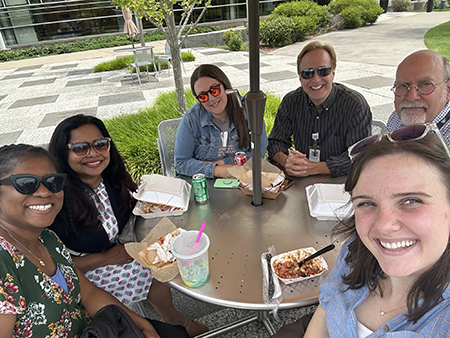
When Thifa Sligh arrives for work at WMU Homer Stryker M.D. School of Medicine (WMed) each day, her goal is simple: “What can I do today to make somebody feel seen, feel heard, and feel that they matter?”
Sligh joined the medical school in May 2025 as manager of Culture and Wellbeing. Her first days and weeks on the job consisted of a robust listening tour where she connected with stakeholders at all levels of the institution to learn about their experiences at WMed.
Those conversations have since sparked a deeper focus on professional and leadership development offerings, employee recognition, and the launch of a new culture and wellbeing initiative known as the PATH Culture Operating System intended to strengthen the workplace culture at the medical school.
“Momentum happens when you take action,” Sligh said. “People are very committed to WMed. They want to be a part of this. They want their voices to be heard. They want to be seen. Our goal as a culture team is what can we do to help our team members, our colleagues feel that they belong here, they matter to us, and that we see them and we value them.”
PATH is defined as follows:
- P - People-Centered: People consistently feel and experience dignity, respect, and mattering, and are seen as whole humans, not just roles.
- A - Aligned with Purpose: People consistently see how their daily work connects to their team's shared purpose and the mission of the organization.
- T - Thriving Environment: People consistently experience pacing, rhythms, and spaces that sustain their energy over time.
- H - Holistic Integration: People consistently experience a connected system where their work reinforces, rather than competes with, the work of other teams and each other.
With these pillars serving as a roadmap, the Culture and Wellbeing team has rolled out a variety of new opportunities to engage over the past year, including, but not limited to, the WMed Community Walking Challenge, where individuals and teams competed against one another to walk the most steps over a four-week period, and the WMed Summer Series, which offered faculty, staff, residents/fellows, and students the chance to explore Kalamazoo and build community beyond WMed at a variety of local events, including Kalamazoo Art Hop and food truck Fridays.
“Whether there is intentionality behind it or not, culture is going to happen” said Rich Daudert, manager of Organizational Development at WMed. “When you can have intentionality behind it, you can really make a positive impact. I’m incredibly proud to be part of this team, moving that culture needle in the right direction every day.”
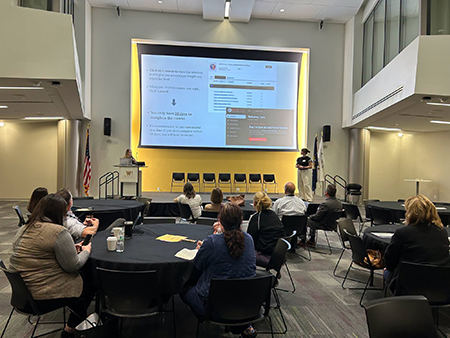
Most recently, WMed held its first annual Staff Day of Development at the W.E. Upjohn M.D. Campus on Friday, September 25. Throughout the day, staff had the opportunity to attend a variety of sessions focused on both role-specific skills and professional “soft skills,” including topics such as communication, leadership, teamwork, resilience, and personal effectiveness.
“People really do feel tied to this mission of health equity, and they want to be part of building something here,” said Ren Hauler, Culture and Wellbeing program specialist at WMed. “Staff Day of Development was not only great because it gave people the opportunities to develop their own skills, but it also provided an opportunity to give staff members who do the behind-the-scenes work an opportunity to share their expertise.”
Having a member of the Culture and Wellbeing team included in employee onboarding sessions, immediately connecting new employees with WMed and community resources while also actively seeking input on what else may be needed has also been impactful.
“We put so much effort in from the jump with onboarding and making people feel welcome, and I can see the shift,” said Rachel Sinclair, HR Coordinator, Onboarding & Organizational Development at WMed. “People are willing to reach out to me directly to ask questions or walk into our space to talk to us. They feel plugged in much sooner.
“It’s really cool to see how our team is thinking outside of our organization and considering people holistically,” Sinclair added. “It’s made a difference. I see people’s faces light up when we’re able to offer them resources. It’s exciting.”