
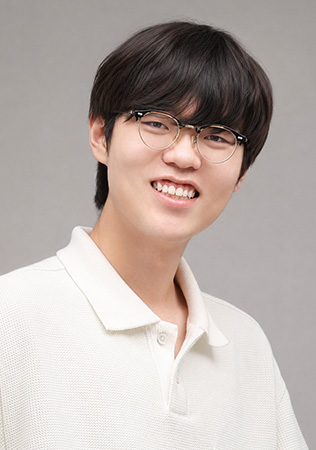
During his surgery clerkship in July, M3 Shane Kim spent a Friday in the Simulation Center at the W.E. Upjohn M.D. Campus participating in trauma training that included several scenarios, including the aftermath of a motor vehicle crash.
“They ran us through that primary survey, reminding us to check A, B, C, D and E—airway, breathing, circulation, disability and exposure,” Kim said of the training led by Drs. Lisa Miller and Sheldon Maltz, both associate professors in the Department of Surgical Sciences at Western Michigan University Homer Stryker M.D. School of Medicine (WMed), on July 31.
Kim, a native of Long Island, New York, said the simulations that day were a helpful refresher of scenarios he and his classmates in the Class of 2028 encountered during Medical First Responder training in their first year of medical school.
The training also proved critically important the next day—Saturday, August 1—when Kim found himself in a real-life situation in which he had to provide care to a husband and wife, ages 70 and 68, respectively, who were involved in a motor vehicle crash in Portage, Michigan.
Kim said the crash happened right in front of him that morning as he sat in a line of vehicles on South Westnedge Avenue. He was planning to grab a drink from Starbucks before meeting up with friends for pickleball when he watched a northbound pickup truck cross the road’s centerline and crash into a crossover vehicle that was stopped at a traffic light along with Kim and other drivers in the southbound lanes.
The collision sent the crossover vehicle spinning. Kim watched as its airbags deployed and the windows shattered.
“It was a really bad accident,” Kim said.
In the moments that followed, Kim jumped out of his car to check on the couple in the crossover vehicle and the driver of the pickup truck. The pickup truck driver appeared to be OK at the scene, and the woman from the crossover vehicle was able to walk away from the crash and sit in a chair brought out to her by employees from a nearby Taco Bell.
For Kim, his MFR training - and the trauma training he had received just the day before - kicked in immediately. With stethoscope in hand, he performed a primary trauma survey on the woman. She appeared to be OK, Kim said, although he was concerned that she may have suffered a head injury.
He next checked on the woman’s husband, who was unable to get out of the crossover vehicle on his own. Kim assessed the man while he remained in the vehicle and found that he had diminished lung sounds on his left side, which could be a sign of a pneumothorax.
As paramedics and other emergency workers, including Stephanie Tafakji, DO, a third-year Emergency Medicine resident at WMed, arrived on the scene, Kim relayed the results of his assessments to them. He said he told Dr. Tafakji about his concerns for the husband and wife, letting her know that the man might need a chest X-ray to check for fractures and a possible pneumothorax and that the woman might need a CT scan to check for a possible epi/subdural hematoma.
Dr. Tafakji said she was grateful for Kim’s assistance at the scene on August 1 and applauded him for his quick actions in the aftermath of the crash.
“When I arrived on scene, Shane provided a concise, organized handoff with the pertinent findings for each patient, allowing our team to quickly prioritize care,” Dr. Tafakji said. “Throughout the incident, Shane continued to be an invaluable member of the team. He anticipated the needs of providers, efficiently gathered equipment and supplies, and remained calm, composed and adaptable in a high-stress environment. His willingness to help wherever needed and his ability to work seamlessly alongside EMS personnel exemplified the qualities we strive to develop in future physicians.
“Shane’s actions reflect not only strong clinical knowledge, but also professionalism, teamwork and a commitment to serving others when it matters most,” Dr. Tafakji added.
Kim said the man and woman were both taken to Bronson Methodist Hospital for additional evaluation after the crash. After he left the scene that day, Kim changed into his scrubs and headed to Bronson to follow up on both patients.
“I checked their labs and imaging and I talked to both of them, and luckily they were all OK,” Kim said. “It was a miracle in a way.”
Kim said the husband and wife were grateful to him for his actions after the crash. The couple was on the way to a family gathering when the crash occurred, and the woman had prepared cookies for the visit. At the hospital, she shared the cookies with Kim and other medical staff as a thank you for their efforts.
“I was very grateful that no one was seriously hurt,” Kim said.
As Kim has had time to reflect in the days since witnessing the crash, he said he’s thankful for the training he has received at WMed that allowed him to help without hesitation. He has no doubt, he said, that his classmates at the medical school would have done the same thing because of the training they’ve also received.
He said he is also thankful to Dr. Tafakji for the opportunity to assist her at the scene of the crash on August 1, as well as for the support he has received from faculty and staff during his time at WMed, including his white coat sponsor and mentor, Dr. Mark Loehrke, associate professor emeritus in the Department of Medicine.
“It’s that repetitive training that allowed me to immediately overcome any fear that I might have had and just walk out and act,” Kim said. “I saw two people who really needed help that day, and I think our education at WMed formed a confidence that allowed me to provide that help.
“All of my other classmates would have done the same thing,” Kim added. “And I want to thank Dr. Miller and Dr. Maltz for their expertise, their knowledge and their willingness to teach. There are amazing faculty members here, and they have taught me how to act when someone is in need. I’m very grateful.”