
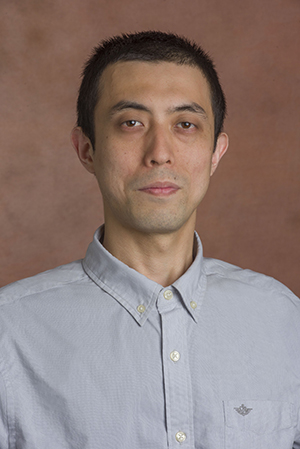
Hiroyuki Hirakawa, MD, PhD, wants to improve long-term health outcomes for leukemia patients.
As an assistant professor in the Department of Investigative Medicine and a researcher in the Center for Immunobiology at WMU Homer Stryker M.D. School of Medicine (WMed), Dr. Hirakawa is using mouse genetics to study how the bone marrow microenvironment regulates normal hematopoiesis — the process by which the body makes new blood cells — and hematopoietic disorders such as leukemia.
“Many people are suffering from leukemia, and there’s no effective drug that targets the leukemia microenvironment,” Dr. Hirakawa said. “I hope my research can be translated to extend the lives of leukemia patients. Leukemia is not a disease that affects people with specific age or gender; the development of new treatments will benefit everyone equally.”
Dr. Hirakawa received his MD degree from Tokyo Medical and Dental University in Japan. He then joined the laboratory of Dr. Shingo Sato at Tokyo Medical and Dental University where he studied bone metabolism and earned his PhD degree in 2019. After completing his PhD, Dr. Hirakawa went to Columbia University Irving Medical Center in the laboratory of Dr. Lei Ding, where he studied how hematopoietic stem cells (HSCs) and the bone marrow regenerate after myeloablative stress.
Since joining WMed in September 2024, Dr. Hirakawa has continued delving into the bone marrow microenvironment, generating new mouse models and investigating cellular and molecular mechanisms that regulate hematopoietic stem cells and leukemia in vivo.
“Leukemia is one of the most common hematopoietic disorders,” Dr. Hirakawa said. “Any normal hematopoietic cells can be transformed into leukemic cells by acquiring mutations. Leukemic cells proliferate in the microenvironment where their normal counterparts face negative selective pressure. My research is aimed at understanding the interaction between leukemic cells and their microenvironment, which will provide insight into how leukemia cells remodel a compromised microenvironment to their survival advantage.”
Dr. Hirakawa’s research is currently supported by WMed start-up funding, though he is also applying for several National Institutes of Health (NIH) grants, as every dollar counts in moving his research forward.
“It is hard to get funding these days, and the way funding can be obtained is often unpredictable,” Dr. Hirakawa said. “Donations are very helpful in sustaining our research and providing benefits to patients immediately.”